Showing posts with label viking. Show all posts

Monday, May 4, 2015

The Invincible City of the Tusk People


It is called the Invincible City because it has never been conquered by an army (though the city's masters have changed a few times).  From a distance, it looks like a loaf of bread.  It sits in the frozen south, the adopted brother among the other Ryvanwall kingdoms.

The Invincible City has always been alive in the most literal sense.

Legends

If you believe the tales, the people of Mon Ryva were beset by enemies, and they called out to their god for a place of refuge.  But no refuge was forthcoming, and they were driven to the sea, where their prophets bid them wait.

It was heralded by flotsam.  A door the first day.  Then a mass of broken furniture.  Many thought that there had been a shipwreck.  It wasn't until the beach broke out in cobblestones, like a rash, that the people of Mon Ryva realized that something extraordinary was happening.

Something came in from the ocean that night.  They all watched it approach; they saw its humped back against the horizon.  Chimneys bristled against the midnight sky.  Atop a spine of minarets, brine-spattered flags licked the wind before dipping back into the sea.  Hundred of feet boulevard churned the surf behind it.  Moon-stained windows broke above the surf, glistened, and then dove back under.  The city was swimming to land.

When the reached land, there was an earthquake, and water swept away the observers.  When the confusion died down, there was no sign of it.

And over the next few days, the Invincible City grew from the dirt, an inch every hour.  Miniature houses sprouted like mushrooms, and ballooned.  Larger buildings pillowed over smaller ones and eventually subsumed them.  And like honeycombs, they arranged themselves into squares.

Through this chaos, a network of streets.  Large thoroughfares first that later swelled, and branched into smaller tributaries.  The geometry of vascularization.

The walls grew like weeds.  A mixture of stone, plaster, and other intermediate materials, they encircled the new city like molars.  They were huge and blunt and bit at the sky.  To this day, they still resemble teeth.

The foes of Mon Ryva came for them, but the walls were scarcely needed.  The earth itself opened up and swallowed them all; men and horse alike went tumbling into that gnashing pit.


The City

It is a strange benefactor, the city that Mon Ryva sent them.  It has its own whims, its own whiles.  And it has a secret history that the people are not privy to.

In the early days, , it is said that strange buildings would sprout.  Rounded things that bristled with coral.  Buildings without doors or stairs.  Vertical avenues into the ground, that led to columnar apartments that would only be suited for tenants capable of flight, or swimming.

And there are stories, too, of the cities old inhabitants.  Glassy-eyed fish men found cowering in alleyways, who were snapped up by the cobblestones as soon as they ran for the ocean.  Or people who would open a closet and find a set of sea fans wreathed in gold wire, or a set of pink-lipped amphora of coral.  But then the city would snap the closet shut and draw it away, as if it were embarrassed, and such closets would never be seen again.

Of course that has all changed now that the Invincible City has learned to imitate our cities perfectly; such slip-ups no longer happen.

The city is no one's slave, and it does what it wishes.  It eats people, sometimes a great deal of people, but this is never haphazard, and never without reason.

The city has four immutable rules.
  1. No metal.  Such a hard substance makes the city jealous, for it's hardest stone is still softer than a child's tooth.  Money changers are available outside the city, and they will exchange a traveler's coinage for the money-marbles of Meltheria, or the hakaam (dog bones) and ceremony plates of Fangol.  Metal weapons are likewise forbidden, and all of the nobility of the Invincible City wear chargale swords.  
  2. No digging.  This is a wound in the flesh of the Invincible City, and it will be quickly met with destruction.  You must also be more careful in the basements of the city, for it is closer to the city's heart, and therefore, more carefully watched.  
  3. No destruction nor construction of buildings.  Like digging, this is either an injury or an insult.
  4. No blood on the floor.  The slaughterhouses are all located outside of the city, and if you are wounded in the city, you must be careful not to drip any on the floor.  The city hungers, and sometimes it cannot control itself.
Of course, these rules are limited by the city's attention and senses.  It sees from its surfaces and it tastes with its floor, but these are slow and indistinct senses.

In the marketplace, a man draws a metal sword and stabs an enemy.  He quickly sheathes his sword, and nothing terrible happens to him.

In the marketplace, a man dapples the bricks with his blood.  He moans and cups it to keep from running, and his friends leap to bind the wound with their shirts.  Nothing terrible happens to him.

These men are lucky.

For every round that you use a metal tool, or drop blood on the floor (from a piercing or slashing weapon, for example) there is a 2-in-20 chance that you will draw the ire of the Invincible City.  This chance increases cumulatively with exposure, so after the third round of using lockpicks, there is a 6-in-20 chance of being noticed.  Taking measures to disguise your metal (such as wrapping a mace in leathers) will cut this probability in half.

If the city is annoyed at you, and watching you more closely than others, also increase the chance by +2-in-20.  If the city loves and adores you, you may wear metal freely and bleed where you wish, but the city loves no one save Angra Blacktongue.

If the city wishes to kill you, this is what happens: the street suddenly yawns beneath a man's feet, and it closes around his torso.  A moment of crying out, a stunned alarum, and then the cobblestones part slightly and the man is sucked down and swallowed, slurped up like a noodle.

Beneath the ground, the people say, the cross-sections of the underground are neither brick nor sewer but something streaked with red and white and blue that is thick like clay.

But to tell stories of such incidents is to exaggerate the malevolence of the city.  Obey the rules and you will be fine.

Playing House

There are no taverns in the Invincible City, because there are plenty of houses.  Buy some food from a vendor in the street, and then find an uninhabited house.

However, the city has expectations.  If you want to occupy a family house, the city will expect you to act like a family (not a bunch of adventurers).  Failure to do so can lead to leaky roofs, stuck doors, rats, and other signs of the city's disapproval.


The Secret Names of the City

As you'd expect, this produces a lot of curiosity.  Wizards and sages have done their own research, and the city usually eats them for their trouble.

By all accounts, the Invincible City has other names, true names, dating back from when it was something else, somewhere else.

By all accounts, the Invincible City has a mind.  There have been many attempts to speak with it; but there have never been any responses.

By all accounts, the Invincible City is capable of speech.  It merely chooses not to respond.
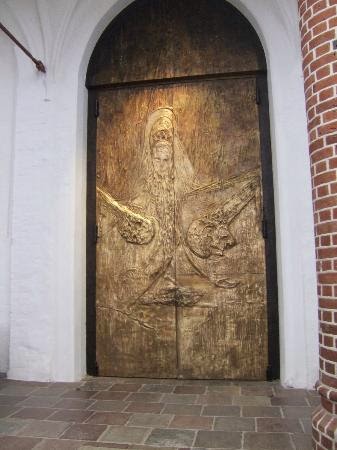

Neighborhoods of the City


Architectural Features
Roll 2x for each neighborhood
  1. Caged balconies dipping into the street.
  2. Migration of windows, moving across the surface of building as if through molasses.  Despite this apparent softness, they are not any easier to remove than normal windows.
  3. No streets.  This syncytial neighborhood is one big, connected interior.
  4. Small earthquakes.  This doesn't disturb the buildings, but other things (shelves) might fall over.
  5. Waves traveling through the cobblestones, as if they were floating on top of a thick ocean.
  6. No exterior doors on the first floor.
  7. Buildings have a freakish abundance of doors, placed at all levels.
  8. Buildings made entirely of glass windows.
  9. Buildings are sideways and built into the floor.
  10. Rats behaving like ants.
  11. Grinding sounds coming from beneath you.
  12. Sudden senses of vertigo.  People in the street (including you) are wobbling as if drunk or dizzy.  Everyone has lost their sense of balance.  Tripping people is fantastically easy, but attempting anything more complex than a walk risks falling over.
  13. No buildings, just hills made of cobblestones with doors in the side.
  14. Underground.  The size of the corridors changes to reflect how much the Invincible City likes you.  Beloved people come and go easily, but enemies are nearly smothered.
  15. Flooded.  Water up to the waist.  Thousands of fountains erupt from the street.  Sharks police the streets.  Canoes.
  16. Uneven floors.  Not one surface in this neighborhood is level, and most are quite steep.  Buildings lean drunkenly into each other.  
  17. Continental drift.  New buildings erupt from a miniature fault line, travel across the neighborhood, and disappear into another fault line.  The whole process takes less than 3 days, and most people change their addresses daily.
  18. Streets and buildings are reversed.  Huge network of branching hallways surrounds courtyards.  The courtyards are private residences, while the hallways are public streets.
  19. Hungry houses.  The buildings here are carnivorous.  There is a distinct smell of blood.  Locals travel through these neighborhoods, but know better than to enter an untrusted building.
  20. Sealed houses.  No doors, no windows.  Locals mostly travel through this area, but you may find a few of the poorer people camped out on the porches.
  21. Archetypal Slum.  Urine trickles from between crumbling bricks.  Deep mud lines the streets.  Scrawls of graffiti display a startling self-awareness, yet a lack of understanding of proper context.  "I will kill the diggers." "Poor people."
  22. Archetypal Aristocratic.  Mansions.  Balconies.  Plaster walls.  Golden filigree in the lintels.  Locals know better than to scrape off the gold.  Many are multiple stories tall, but only have one story inside, with very high ceilings.  If multiple people are in a house, the city expects some to behave as servants and others to behave as nobles.
  23. Ordinary buildings, magnified into towers. 
  24. Yawning pits in the middle of every intersection, emitting gases that cause temporary blindness.
  25. Monotonous repetitions of the same building cause travelers to be lost. Getting out of this neighborhood requires longer than usual.  If the person leading the party fails an Int check, roll a d6: 1 extra hour, 2 extra half day, 3 extra day, 4 extra week, 5 extra month, 6 extra year.  Even a success causes the party to be stuck there for an extra hour.
  26. Stunted buildings.  5' ceilings.  3' doors.
  27. Overgrown buildings.  Doorknobs too high.  Stairs difficult to ascend.
  28. Malformed buildings.  Stone is soft to the touch, streaked with reddish bits of stone that look like veins.  Slouch against each other.
  29. Buildings are ready for war.  Gutters as wide as moats.  Most buildings have drawbridges instead of doors.  All windows are barred.  Murder holes.  Arrow slits.  Spikes.
  30. An intrusion of the sea.  The first story of all the buildings is submerged in ocean water at high tide.  Urchins prickle the walls, and the streets are awash with silt.  Grey, fat-bellied bull sharks.
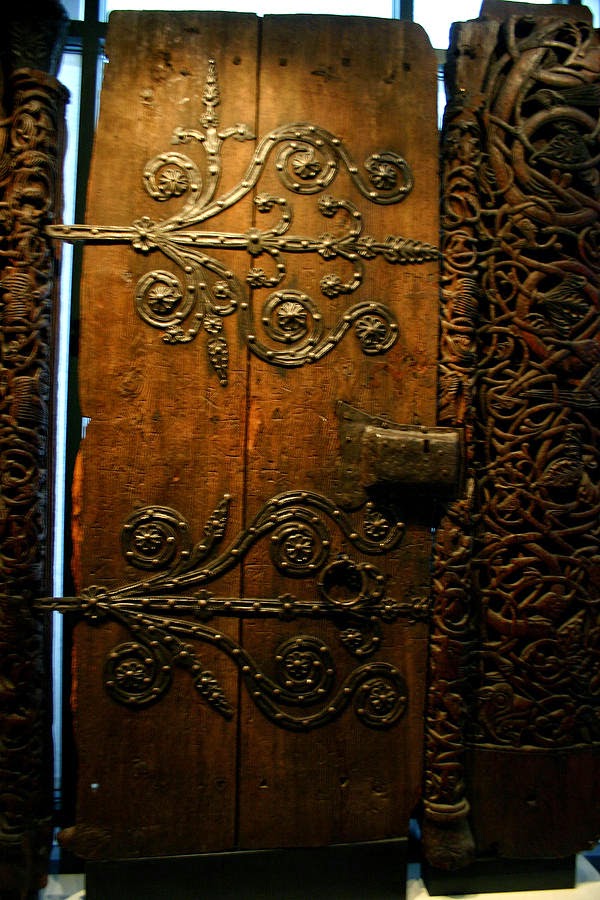
Landmarks
Roll 1x for each neighborhood.  Some of these are unique, and the city will only have one.
  1. Pit of Justice.  Judicial and honor duels.   Fights are always to first blood (and death).
  2. Ecstasy Den.  Alchemically infused prostitutes deliver ecstatic drugs through their own body fluids.
  3. House of Blacktongue.  It spirals up like a rose, and sinuous curves of wood support the supple flesh of the stone like spreading veins.  A woman inside a house inside a courtyard inside a house inside a courtyard inside a wall.
  4. Mercenary Barracks.  Long and low and smelling of sulphur.
  5. Garden.  False trees.  False flowers.  Stone benches.  The sound of water, but no sight of it.
  6. Marketplace.  A network of narrow canyons through smooth-walled buildings.  Merchants loom in shadowed alcoves, selling snakes, spices, and chargale swords.  The density of corners means that they all appear suddenly.
  7. Harbor.  Whalebones and alehouses.  Lantern-oil sellers, demonstrating the quality of their wares, spilling fire.  Bone harpoons.
  8. Flesh market.  High quality slaves sit unattended atop pedestals, shouting out their prices and extolling the quality of their breeding.  Lower quality slaves do the same thing from cells embedded beneath the road, peering up through the slats at you, stating their worth, sounding doubtful.
  9. Military Command.  Real soldiers, sober and attentive.  A grey-walled building, stained as if from a millennium of rain.  Trained walruses, eager for a chance to test the strength of their ropes.
  10. Cult House.  The sign of the tusk painted on every wall.  The smell of ash and vitriol.  The yellow-robed clergy of Zala Vacha.  Sounds of bloodless sacrifice.
the sign of the tusk

Then a wizard named Oshregaal came to the Invincible City and precipitated the rise of the Tusk Clan.  They are led by Angra and Gaskin Blacktongue, and their depredations will probably have to wait for a separate post.

Thursday, April 16, 2015

Brewery Encounters


Gonna put a brewery dungeon on my viking hex crawl.

If you are a player in my Sunday D&D game, fuck off.  Especially you, John.


Animated Barrel

It's a fucking barrel that hops around and bashes into you.  What the fuck else do you want me to say?  What's inside the barrel? [d3] 1 nothing, 2 grain, 3 1d3 barrel riders, who will hop out as soon as they wake up (such when the barrel takes damage).

HD 2 AC as chain Slam 1d6 + swallow (50% chance)
Move slow Int 3 Morale 12

Wooden Walls -- Takes half damage from piercing.  Whenever they take physical damage, creatures inside the barrel take damage equal to half the original amount.
Rowdy -- Barrels with an enemy inside them will bash themselves against walls, roll down stairs, and leap out windows.  They take half the usual damage from these activities; their occupant takes full damage.  The barrels enjoy this process; they don't care if they get smashed to bits in the process.


Barrel Rider

These are horrible little people, halfway between goblins and halflings.  They know all of the drinking games, and communicate by singing drinking songs.  They piss all over everything.

HD 0 AC as leather Shank 1d6
Move as human Climb as monkey Int 9 Morale 6

Roll Barrel -- Can roll a barrel.  Rolling barrels go as fast as a human on flat ground, and much faster down hills or stairs.  If one hits you, treat it like a trample attack that does 1d6 damage (or more if the barrel is full of heavy things).
Drunkards -- They are always surprised.  Even if the PCs set off a stick of dynamite in the next room.  If good-quality booze is dropped on the ground, they will abandon everything else to grab it.  If it is very high quality booze, there is a 50% chance that 1d3+1 of them will fight each other over it, even in the middle of a battle.


Hoplick

These are big plants made of long, leafy vines.  If you piss them off, they'll uproot themselves and flop over to you, like clumsy, boneless spiders.  *rustle whump rustle flop rustle*

HD 6 AC as leather Flail 1d6 + Poison
Move slow Int 1 Morale 10

Leafy -- Take double damage from slashing.
Poison -- Make a Con check or be unable to taste anything for a week (except more Hoplick).  If you have already lost your sense of taste, you instead drop what you are holding (50%) or fall over (50%) from nausea.
Flail Wildly -- Hoplicks can attack all creatures in 10' simultaneously with their Flail attack.


Beer Elemental

HD 6 AC as leather Slam x 2 1d8 + poison
Move as human Swim fast Int 6 Morale 10

Mostly Water -- Can flow under doors.  Immune to fire.
Poison -- Suffer the effects as if you had just had 1d6 drinks.  Save for half.
Somehow Drunk -- Each turn roll [d6]
  • 1-2 Slam nearest enemy
  • 3 - Slam most injured looking enemy
  • 4 - Stumble onto adjacent enemy.  Make 1 slam attack against enemy, and if they fail a Str check, they are knocked prone.  Then the Beer Elemental falls prone.  
  • 5 - Fumble as if the Beer Elemental had rolled a natural 1.  
  • 6 - Beer Elemental vomits beer in a 30' cone.  No damage, but everyone must gains 2 drink points (save for half).  This automatically extinguishes fires.  The loss of fluid deals 1d8 damage to the beer elemental.

Fire Elemental

Fire elementals usually just huddle in a furnace at their minimal size (about the size of a cat), conserving their energy.  They'll eat slowly--a log every now and then.  Maybe a lump of coal.  They are castaways, conserving their meager rations.  Soon they will be dead.

Most of them are smart enough to avoid burning down forests and towns.  Sure, the temperature is pleasant for a while, but once everything is burnt down, they'll quickly starve.

HD 6 AC as leather Slam x 2 1d8 fire + Ignite (Dex check)
Move fast Int 6 Morale 8

Mostly Fire -- Take 1d6 damage if you throw a bucket of water on them.  No attack roll required.   At full health and size, they shine twice as bright as torch.
Fuel Dependent -- Must constantly eat fuel, usually wood or coal.  If they don't eat anything for 10 minutes, they begin dwindling, losing 1 HD every 10 minutes.  Eating fuel restores them quickly.  They can shrink down to cat size when quiescent (to conserve fuel), but flare up to their full 7' height when they want to kick ass.
Explosive Finish -- Unless it is killed with water, a fire elemental releases all of its hot gases upon dying.  All creatures within 10' must save or take 2d6 fire damage (save for half).


Frothmonger

These poor creatures have been colonized by sentient yeast.  Picture a leather jerkin and leggings, with yellow foam fizzing out the collar and from between the buttons.  When they run, the yeasty froth blows off their heads and plops on the ground.  Also you should google what a mash paddle looks like if you don't already know.

HD 2 AC as leather Mash Paddle 1d6
Move human Int 8 Morale 6

Cleansing Flame - Whenever they take fire damage, they get a save vs Disease to shake off the yeast infestation.  (This returns them to a level 1 brewer.)
Nasty Froth -- Whenever a frothmonger takes physical damage, it explodes of nasty squirts of yeast.  All creatures within 5' take 1d4 damage.  Creatures that have no sense of taste are immune to this effect.
Contagious -- If you eat or drink frothmonger froth, save vs Disease.  (Frothy Doom: 1d6 Dex, causes head to turn into fizzy yeast mounds).  Frothmongers are eager to spread this disease.


Rules for Drunkeness
  • Every drink you take gives you a drink point.  You lose a drink point every hour.
  • The first X drink points do nothing, where X is half of your Constitution.  Each drink beyond t hat threshold is instead a drunk point.
  • Each time you gain a drunk point, you must make a Con check to avoid passing out.
  • Each drunk point gives you -1 to Initiative, Saves vs charm or emotion, and Con checks to avoid passing out when binge drinking.  Additionally, each drunk point expands your fumble range by 1 (so if you had 3 drunk points, you would fumble when you rolled a 1-4, instead of just a natural 1.)
Rules for Being on Fire
  • 1d6 damage each turn, after your movement but before your action.  Your scrolls burn up.
  • Can be extinguished by jumping into water (movement) or rolling around on the ground (action).
Rules For Being Swallowed
  • Can escape if the monster dies or if you claw your way back out its throat.  The latter is a Strength check with a penalty equal to the HD of the monster.
  • Can attack the monster normally with daggers and small weapons.  Attacking with other weapons is at -6.
  • If it exists, stomach acid does 1d4 damage per round.
  • Obviously, you'll have to hold your breath.
Rules For Holding Your Breath
  • You can hold your breath for a number of rounds equal to half of your Con score.
  • If you prepare for a round (hyperventilate, calm yourself) you can hold your breath for a number of rounds equal to Con score.
  • If you black out, you need to be resuscitated by someone.  This is the same as resuscitating someone from the Dying condition: The medic needs to make an Int/2 check, with a -1 penalty for each round that you've spent Dying (or unconscious underwater).

Nonsensical Rant about Fire Elementals

Okay, real talk.

Elementals are sort of stupid.  I don't care how intuitive they are, or how much mythic resonance they have.

Water elementals are basically just H2O, because that's a liquid at room temperature.  Air elementals are assumed to be atmospheric gases like N2 and O2, because those are gases at room temperature.  And earth elementals are whatever, maybe granite or various oxides, because those are solid at room temperature.

But fire isn't like that.  Sure, plasma is the fourth state of matter, but when you look at a candle flame, you're basically looking at a chemical reaction between solid soot particles and hot gases.  The light comes from blackbody radiation.  That's a temporary thing.  Fire is temperature dependent in a way that the other elementals aren't.  You can't point to a singular molecule and say that this is what fire is made out of.

But this is only true on the ground.  Fire elementals exist happily in the sun, in volcanoes, and in the upper atmosphere in the auroras (where they are huge and diffuse and happy).  But walking around a dungeon is incredibly horrible for them.  Our world is as inhospitable as Antarctica to them.

So fire elementals exist not as matter, but instead as a zone of hot, cycling gas.  They're very well insulated, so that they don't cool down too fast.  This is why they aren't as hot as you'd expect--merely campfire-hot instead of furnace-hot.

Thursday, March 12, 2015

Good Fairies

RATED F for FAIRIES (NSFW FAIRY BITS AKIMBO)


HD 0 (HP 1)  Armor as plate + shield
Shoot Arrow 1d4  Spellcasting (see below)
Fly as sparrow  Morale 4 Save 14+
*Fairy dust.  See below.
*Stealthy and Oblivious.  Surprising on 4-in-6, but being caught unawares the other 2-in-6 (usually because they're playing, dancng, singing, etc).
*Glamour.  Clothing, armor, and attacks are appear however the fairy wishes (often subconsciously, reflecting their emotions).

Each fairy is covered in fairy dust.  They can give this dust away, or you can shake it off of them.  A fairy without fairy dust cannot fly, but will recover overnight.  Fairy dust cannot be stockpiled, and disappears overnight.  When sprinkled on a creature, grants flight for 1 minute.  Each type of fairy dust has a secondary effect (see below).

Each fairy knows 3 spells, each usable 1/day.

Since fairies are created by the dreams of children, they share children's innocence, petulance, and callousness.  There are three types of fairies: good fairies, evil fairies, and noble fairies (who see themselves as adults, and therefore above this whole good-and-evil nonsense).  Fairies love children, but babies are often stolen and sent back to Fairyland, where they are put to sleep in order to create more fairies.

Good fairies are "good", but it is a child's notion of goodness.  They see themselves as the heroes of their own stories, and will do anything to uphold that role.  To them, live is a perpetual game of 'knights and orcs', and they are the knights.

Fairies all enjoy glamour--to a large extent, they can choose how their their clothing and hair appear.  Even their bodies are malleable to some extent.  A fairy's perception of themselves is always mirrored in their appearance.  A fairy's beauty is proportionate to how good they perceive themselves to be.  This is glamour, and it has a mirror side: a fairy's appearance is also reflective of how other's see her.  A beautiful fairy might suddenly shrivel and her wings droop the moment that the villagers discover that she killed the shepherd.

Around a fairy, minor magic happens spontaneously.  Flowers bid the fairy good day, captured witches turn into cakes, and fairies often bestow blessings that stem from nothing but their good intentions.  This is the universe rearranging itself to better suit the fairies in small ways.  In some ways, our reality is their dream.

Although they shun violence and abhor murder, even the least of good fairies possesses powerful magic, especially curses.  For example, gem fairies can turn all of your coinage into sparkly mud, no save.  They all enjoy beauty, compliments, and courtly language.  Niceness in general.

Because they have a child's grasp on morality, things like cussing often upset a fairy more than murder.  Children get in trouble all the time for cussing, but it's rare that a kid needs to be told not to murder someone.  So murder exists in an unexamined moral zone.

Fairies often exist at the center of an adoring group.  Usually children, animals, or some clan of bestial humanoids.

Lastly, fairies are demanding.  Whenever you meet a fairy, they will invariably want something from you.  They see themselves as absolutely entitled.  Most of them are very busy Making The World A Nicer Place, and if they ask you to help them do it, you should feel honored to be included.

Interactions with fairies usually follow this script:

  1. Fairy appears and demands something.  They will smile and ask nicely.  Please?  Peesh?
    1. If you seem reluctant, they will throw a tantrum.
  2. If you do not comply with their politely-phrased request they will fight you.
    1. Mess with their stuff.  When discovered, curse them, turn invisible, and fly away.
  3. If you do comply, they'll be overjoyed!  You're their new best friend!
    1. If you do an extra-special job (positive attitude required!) they'll reward you with fairy treasure.
    2. If you want to bash the fairies and just steal their treasure, the treasure is usually at the bottom of a pond or inside a ridiculously tiny box or something.
    3. Keeping fairies captive is a very bad idea.  Fairy tears will eventually alert the noble fairies, and you don't want to mess with them.  (They can melt you like a candle.)

Types of Fairies

Candy Fairy
Candy fairies fly with pastel-colored dove wings.  They are the most playful.
invisibility, swords to sugar, charm
Candy fairy dust can also be sprinkled on food and/or drink, where it turns the substance to delicious candy and functions as purify food and drink.

Flower Fairy
Flower fairies fly by clinging to dandelion stems.  They value attractive people the most.
invisibility, food to flowers, entangle
Gem fairy dust also be sprinkled on a plant, which will cause it to perk up, grow a bunch of flowers, and gain the power of speech (as talk to plants) for 1 minute.

Gem Fairy
Gem fairies fly with quartz dragonfly wings.  They value attractive items and places the most.
invisibility, gold to glitter, glitterdust
Gem fairy dust can also be sprinkled on a gem to split it into 1d4 smaller gems, each worth half of the original gem.

Ice Fairy
Ice fairies fly by riding a large snowflake.  They like to do nice things for children, especially delivering presents to underprivileged kids.
invisibility, tinder to toys, ice (as grease)
Ice fairy dust can also be sprinkled on a fire to instantly extinguish a 10'x10' area of flame.  If sprinkled on a fire creature, that creature takes 3d6 damage (save for half).  If sprinkled on a fire-breathing creature, that creature must save or be unable to breath fire for 1d6 turns.  (However, these creatures will gain flight for 1 minute, so be mindful).


New Spells
Usually cast just prior to turning invisible and flying off.

Food to Flowers
All of a character's rations turn into bouquets of beautiful flowers.  Potable liquids turn into hibiscus nectar.  No save.

Gold to Glitter
All of a character's money (precious metals, promissory notes, etc) turn into worthless glitter.  Gemstones are immune to this effect.  No save.

Swords to Sugar
All of a character's weapons turn into sugar-crystal versions of themselves if it fails a saving throw (make a save for each weapon).  Sugarified weapons shatter the first time that they roll maximum damage.  Shattered sugar weapons yield a number of rations equal to their die size.

Tinder to Toys
All of a character's flammable items (potions, lantern oil, potions of fire breathing) turn into toys (all of the same type of toy).  Roll on the toy table; there is a 25% chance that one of the toys is magical.  No save.

stealin dis babby yep
Candy Fairy Encounters (Demands)
  1. 1d4 candy fairies want the party to rescue a pair of children, who have been stolen by a witch.  The fairies insist that the witch be captured alive and brought back for a trial.  If the party heads straight to her hut, they'll have just enough time to stop the witch from eating the kids.  She's not baking them in the oven or anything--she's just casting hold child on them, tossing them on the table, and having a go with the cutlery.  She's protected by 2d6 pigs and an animated scythe.  If the witch is brought back to the fairies, the fairies will turn her into a cake and share her with the children. It'll be festive; the kids and the fairies will be like, "This is so weird haha" and then throw cake at each other.  The fairies will also gift the party with 2d6 gingerbread rations, each of which restores 1 HP.
  2. 1d4 candy fairies insist that you got stop two groups of soldiers (each 2d6 men) from killing each other in the woods.  (Violence upsets them.)  The smaller group controls a crumbling tower that the larger group wants.  The soldiers will flip out if you tell them that the fairies sent you.  Fuck fairies!
  3. A candy fairy wants a piggy-back ride!  She'll ride on your head and tell you where to go!  It'll only be 1d6 miles in a random direction!  Don't slow down!  Running slow is boooring!  I can fly faster than this.  Why aren't you making horsey noises?  (The fairy is scared of real horses.)  If the fairy thinks you are going too slow, she will magic you until you really do run as fast as a horse (but lack equine stamina).  The blessing lasts until the end of the day.
  4. 2d4 fairies want the party to join them in a parade through the streets of their gingerbread village!  The parade is to celebrate the gingerbread village that they just built!  If you break anything, you'll ruin the whole ceremony!  The parade is in five minutes.  The PCs will have an opportunity to see the parade route beforehand and learn that they'll have to walk past a bee hive and over a graham cracker bridge; the fairies are cool with you taking precautions before the parade, but not during.  There are four complications:
    1. Don't step on the peppermint horses!  (Dex checks)
    2. Don't freak out about the bees!  Just take your stings!  If you disturb the bees they might drop the banner!  (BEES ARE STINGING YOU IN THE FACE OMFG.)
    3. Please don't collapse the bridge with your ridiculous human-weight.  (Smaller characters are fine.  Larger characters will have to jump.)
    4. Sing the Candyville anthem!  What's a parade without a song?  (At least one of the players has gotta sing a song IRL.  It doesn't matter how shitty the song is; the fairies will be happy as long as its about how great Candyville is.)

Candy Fairy Treasures
  1. Eternal Gobstopper.  As long as you suck on this gobstopper 24 hours a day, you'll no longer need to eat or drink.
  2. 1d3 Fizzy Sodas.  Function as potions of levitation that end with a tremendous belch.
  3. Licorice Gumdrop.  If eaten, save vs curse or turn into a gingerbread person (size doesn't change).  Gingerbread people are like other adventurers, except that their wounds don't heal naturally or via healing magic--they need the services of a baker.
  4. Two Loaves of Bunny Bread.  Acts like a rabbit sans fear and nervousness.  Tastes like sweet bread.  Doesn't mind being eaten, and reacts to everything else with a sort of aloof curiosity.  If the entire loaf is eaten, functions as a potion of cure light wounds.  It is possible to breed more bunny bread, but each generation will heal 1 point less HP (if you want to go down this road, be aware that they only eat candy).

Flower Fairy Encounter (Demands)
  1. 1d4 flower fairies want you to have a tea party with them.  Proper etiquette is a must.  Cleanliness is a must (the party will be given a chance to wash in a nearby stream beforehand).  One of the PCs will fall ill from the tea and must save vs poison every turn until they vomit (hopefully they won't barf at the table).
  2. 1d4 fairies are sad!  Their favorite treant is going to be alone this Valentine's day, and they want to find her a date!  The treant's name is Frambledeen and she's a weather-beaten oak with a quick wit.  A bit depressive, though.  There are 4 eligible bachelor treants in the forest:
    1. Sourstump can't leave his post to go on a date!  The lumberjacks will cut down all of his friends!
    2. Bargle Mog is willing to go on the date, but it will go disastrously if he brings his friends: a pair of harpies that nest in his hair.
    3. Gornsnacker is a tangle tree treant, and won't be able to resist trying to eat the PCs.  Out of all the treants, he's probably the most fun to hang out with, though (if he's not hungry).
    4. Old Man Jarko is a noble specimen to be sure, but he gets so nervous that he'll need coaching every step of the way.  He has no idea how to talk to a lady, and will probably need someone whispering in his ear the whole time. 
  3. 1d4 fairies are sad!  A grumpy, smelly, ugly, old druid (HD 7) keeps pulling up the flowers that they plant.  They want you to feed him a magic strawberry.  The druid lives in a shallow cave with his blind, toothless bear companion.  The druid has druid spells but can also turn into a huge auroch (HD 7, blind, 25% of charge attacks result in druid hitting a tree and damaging himself).  If the druid he turns into an enormous strawberry plant.  The plant has 1d4+1 strawberries growing on it, each of which functions as a potion of cure light wounds, except that the eater can also hear the old druid ranting at them.
  4. A flower fairy wants the PCs to plant 3 cherry trees.  Each tree is a small sapling that weighs 10 lbs, its roots in a dirt-filled pot.  Each cherry tree must be planted in a different hex than this one (part of her plan to cover the world with beautiful flowers) and each must be planted somewhere safe and fertile.  Once this is done, the fairy will appear to congratulate them.  If one of the plants dies, the fairy will try to ambush them (4-in-6) in full petulant rage.
Brian Froud

Flower Fairy Treasures
  1. Magical Teapot.  Any liquid placed in it is turned into healthy, hot tea.  Any beneficial properties of the liquid are preserved.  This takes 10 minutes, after which the teapot whistles.
  2. 2d6 Fancy Flowers.  Pin one one your clothing or armor and you will be cloaked in fairy glamour.  You appear to be dressed for a ritzy ball, and have a pleasing, floral aroma.  Each flower is usable once. 
  3. 1d3 Dandelion City Seeds.  Immediately grows into a dandelion when planted, which yields a flower 1 round later.  Anyone looking directly at the flower when it blooms is shrunk to a microscopic height and teleported onto the surface of the dandelion, which is revealed to be a miniature city occupied by cheerful mite people.  They'll offer free food, dandelion wine, and beds at their local inn.  This lasts until the party leaves the dandelion city, morning arrives, or the dandelion is destroyed, at which point the party pops back to full size.  Afterwards, the dandelion city remains there, but the party has no way to return (probably).
  4. Flower Armor.  Functions as chain, or chain +1 if the wearer has Cha 17+.  Once per day, allows the character to smite ugliness, getting +4 to hit and dealing +1d6 damage.  Only works on ugly creatures (by fairy standards).  If the target is really ugly, increase this to +2d6 damage.
Arthur Rackham
Gem Fairy Encounters (Demands)
  1. 1d4 gem fairies want you to recover their treasure chest, which was "swallowed by a small worm".  The worm in question is indeed small for a purple worm, as it's a juvenile (-2 HD, no sting).  It has currently swallowed their newly minted fairy coins (from their mine) and all 22 of their goblins (who worked the mine).  The fairies' current plan involves slathering one of the PCs with ipecac and getting the worm to swallow them.  If the PCs decide to go through with this stupid plan, the worm and the PC will basically make Con checks to see if the PC dies before the worm throws up.  If the worm does throw up, it will vomit out 4000s and a treasure chest containing Sluggo, a half-asphixiated goblin who love to join his saviors as a retainer (and to escape the fairies).  The fairies will want to split the recovered coins.  The PCs can keep Sluggo.  He smells like worm farts anyway.
  2. 1d4 gem fairies want your gems (they can smell them) so that they can replace them in the ground, so that they can bring joy to someone who discovers them for the first time again.  They will pay you 150% what the gems are worth, but they have only 1d6 x 100s with which to purchase your gems.  If you have more gems than that, they'll have to owe you.  Come back next year, when they'll have more money.
  3. 1d4 gem fairies are sad.  Their favorite idol in their favorite dungeon has had its eyes gouged out.  They want the party to recover one of the rubies from a thief named Bengar (HD 4, has 4 HD 2 bodyguards) who is discreetly trying to fence the gem at the nearest city.  Once the party has the gem, the gem fairies will give you the second gem (each worth 1000s) and give you accurate directions to the defaced idol (within the nearest dungeon).  They're actually very trusting, and will take you at your word if you say you replaced the gems.  If you never return, they'll trust that you did what you were asked.
  4. 1d4 gem fairies are appalled at your ugly armor.  They insist that you leave it with them so that they can clean it and make it prettier.  This will take 1 week.  After the week is over, the armor will indeed be beautiful, but will also offer 1 less point of AC than it did before.  There is a 5% chance that the fairies actually improved the armor (as armor +1) instead of degrading it.  If improved, the armor appears to be made of solid gold and:
    1. Can disguise itself as a fancy set of clothing, such as a ballgown or tuxedo.
    2. Can automatically escape from a grab 1/day.

Gem Fairy Treasures
  1. Curse-Eating Gem.  Set in a necklace, this midnight-stained gemstone protects its wearer from curses, granting them a +4 bonus to save vs curses.  Each curse that the wearer saves against is absorbed by the gem, causing it to double in size and value.  The gem starts out being worth 100s, and can absorb 2d4 curses before it shatters, releasing all the trapped curses at once (PC gets a new save against each) and becoming worthless.
  2. Wand of Command Coins with 7 charges left.  Can order a pile of coins to stack themselves, roll along behind you (but not up stairs), hide in crevices, act as rollers for heavy statues, act as spilled marbles, etc.  Lasts 1 hour.
  3. Fairy Coin.  When asked a yes/no question and flipped, the coin will give a correct answer 67% of the time.  One side depicts a fairy queen (the Queen of Consequences) and indicates 'yes', while the opposing face depicts a donkey.  If the PCs ever meet the Queen of Consequences and show her the coin, she will be well disposed towards them.
  4. Mirror Sword.  As a sword +1.  By spending your turn getting into a batter's stance, you can parry a spell that comes towards you.  To parry a spell, make an attack roll as it hits you against an AC of 10+spell level.  This will reflect the spell back at the caster, who has their own chance to parry the spell, except that they must hit an AC equal to the attack you just rolled.  First one to fail the parry is struck by the spell.

Ice Fairy Encounters (Demands)
  1. 1d4 ice fairies and 1d4 children want the party to stay and build a gigantic jungle gym.  This will take 1d3 days for a 5-person party.  Roll random encounters normally.  At the end, they'll have a igloo-cottage they can rest in as long as they want.
  2. 1d4 ice fairies and 1d4 children want the party to stay and play with them.  During this time, the PCs will turn into children (-3 to all physical stats) without realizing it until it is done.  A random combat encounter occurs during this time (but the PCs will perhaps have the fairy's help in defeating it), after which the fairy will be satisfied.  They will remain children as long as they remain with the fairy.  After they leave, they will revert to adulthood overnight, except that they will have been youthened 1d6 years.
  3. 1d4 ice fairies want the party's help delivering presents.  Each party member must break into a house and put a present under the pillow of a sad child.  (Since this involves splitting up the party, hasten your narration as much as possible, i.e. bring them straight to the complication.)  Complications (d6):
    1. 1d3 dogs.  Roll a reaction roll to see if they like you.
    2. Child is only 75% asleep and wants to know what you're doing in his room.  Cannot be convinced that fairies are real--wants to know the real reason.  Will yell for parents if you cannot give a good excuse.
    3. One of the family members is still awake.  You'll have to go past them to get to the child's room.
    4. The toy broke and turned back into ice.  Find a replacement, quickly.
    5. They were expecting you!  Milk and cookies were set out for you.  Delicious.
    6. They were expecting you!  Milk and cookies were set out for you.  Milk is poisoned.  Save vs paralysis or you'll be paralyzed long enough for them to discover you.
  4. 1d4 ice fairies are sad!  A child ran away and has been lost in the woods.  If you do not find them in 6 hours, the fairies will blame you.  Child is not that far away.  Complication:
    1. Child is at the top of a tree, where the branches are precariously thin.  Too scared to come down.
    2. Child is hiding in a small cave.  She doesn't trust strangers enough to come out.
    3. Child has been adopted by friendly bandits.  Child is drunk on peach brandy and doesn't want to come home.  Bandits aren't too keen on it either, having taken a shine to the kid.
    4. Child is about to be eaten by an owlbear.  You have one combat round to piss off the owlbear so much that it forgets all about the kid and goes for you.  (Let players roll initiative individually for the first round.)  (Protip: running up behind it and kicking it in the nuts is perhaps the most reliable solution to this dilemma.)
Froud
Cottington's Pressed Fairies
Ice Fairy Treasures

  1. Toy Boat. Only works for those who are playful.  When placed in a body of liquid and urged to become larger, it turns into a large, beautiful canoe.  Turns back when removed from the water.
  2. Stick Horse. Only works for those who love the thrill of speed.  When put between your legs and urged to move faster, turns into a fairy horse.  Doesn't function between midnight and dawn, and will revert to toy-form during that time.
  3. Velvetine Bear.  Only works for those who are scared, even if its just a little.  When hugged and urged to provide comfort, it animates and obeys your commands, and is capable of doing anything a clumsy, 5 lb monkey could do.  When clutched to your chest (requires a free hand), you get +4 vs fear.
  4. Tin Soldier.  Only works for those who want to be heroic.  If placed on the floor and commanded to attention, the tin soldier will begin marching towards the nearest person desiring rescue (range 1000' horizontal).  It will even attempt to march up to the captor and attack them with its tiny sword.  (This is useless except as a distraction.)

Thank you +Robin Zink, +Jeff Russell, and +Noah Stevens for pointing me towards better fairy art.


Sunday, March 8, 2015

Stirges


HD 1
AC as chain when flying, as unarmored when attached
Blood drain (1d4 + 1 con damage + attach)
Fly as bat
Morale 6
# Appearing 2d6
Special: If a stirge sucks the blood of someone affected by a potion, they also gain the benefits of that potion.  Drinking a potion while a stirge is attached to you also confers that benefit to the stirge.
Special: The bite of a stirge is painless.  Sleeping characters should make a wisdom check to awaken whenever they take damage from a stirge bite.

Attached monsters:
  • Automatically hit on subsequent attacks.
  • Can be pulled off with a Str check.
  • When killed, damage in excess of their HP rolls over onto the PC.
Stirges look like fibrous leeches or slugs or tongues.  They are the size of two fists, except they have a row of caterpillar legs on the bottom and a pair of slimy bat wings on the back.

They spend most of their time resting in on cavern walls or in crevices, where they spread their membranous wings on the stone around them for stability.  In this way, they look like a stringy nodule of fungus, or a ball of worms.  (And are often misidentified by dungeon neophytes.)

like this

They hunt through their subterranean territories in large flocks, but they also spend a great deal of time sleeping on walls or amid stalactites (noise wakes them up). 
Stirge nests look like an inside-out clam.  Fleshy folds that trap moisture, built around a calcified shell, porous with tunnels and sinuses.  In the center of every stirge nest is 2d6 juvenile stirges (harmless, lacking teeth and wings) and a mass of black jelly.

The black jelly is dungeon honey.  If eaten, a dose of dungeon honey heals as a potion of cure light wounds, but also causes 1 point of Con damage.

Encounters (d6)
  1. A chupacabra (HD 3) with a shepherd's crook.  Behind him, he pulls a stirge nest on cart wheels, which contains his semi-tame flock.  He has taught them to squirt harvested blood into his mouth.  On his back is a jar with 1d6 doses of dungeon honey.  He desires trade with morlocks; he covets their jewelry.
  2. Bloodless corpse whispers a warning before a flock of stirges billows out from beneath her clothing and attacks.  Her name was Blanche.
  3. Lone stirge trails the party, flapping wetly.  It is hoping to lure them back to the rest of the nest (3d6 stirges).
  4. High up on the cavern wall, a group of stirges cluster, asleep.  Also in the room: something that usually requires noise to overcome, such as a rusty gate, locked glass case containing a treasure, a aggressive shadow, a pair of skeletons, or a junk barricade at the verge of collapse.
  5. A vertical shaft with something desirable at the top.  Perhaps daylight?  Stirges attack any characters halfway up the rope.
  6. Red Cloak Kiriak (Wiz 5), a goblin wizard who rides in a flying chariot pulled by stirges, surrounded by a cloud of blood.  He is a cackling pervert who goes out of his way to harm dogs and children, but is extremely friendly to fellow wizards.  In truth, his body is an empty shell, and his consciousness was transferred to his blood long ago (stats as ooze that can cast wizard spells).  He desires wine and the humiliation of warriors.
Dungeon Honey Variations (d6)
Stirges create different types of honey based on what kind of blood they've been sucking.  This might not be a random roll: when considering what type of dungeon honey is in a certain stirge hive, consider what kind of monsters are most common in this dungeon, or closes.  All forms of dungeon honey cause 1 point of Con damage.
  1. Zombie honey is shot through with glitter.  It is a dissociative, imbued with a touch of undeath.  When eaten, you become immune to emotional effects, including pain.  It also makes it impossible to read your mind.  This lasts for the rest of the day.
  2. Troll honey is rubbery like tofa.  It causes regeneration.  1 HP is regained every 10 minutes.  Lasts for the rest of the day.  It can even help you recover from 0 HP, but if this occurs, you also gain a random mutation.
  3. Orc honey is thick like wax.  Eating it causes aggression and irrationality.  Your attacks get -1 to hit and +1 damage for the rest of the day.  This stacks up to +/- 4.
  4. Goblin honey is more viscous than usual, like black mucus.  It grants darkvision for 1 hour.
  5. Dragon honey is reified greed.  This glittering black jelly with a gold sheen has no practical value, but anyone who sees it desired to possess it.  Each dose is worth a whopping 100s.
  6. Ooze honey is rich, royal crimson that encourages growth.  A child or juvenile organism that eats ooze honey will grow to be +10% taller, and will see a corresponding boost to their Strength at the expense of their mind.  (+1 Str and -1 Int, for most systems.)
Variant honey usually has effect on the adult stirges--it is only eaten by the juveniles.

Thursday, March 5, 2015

Owlbears


HD 5
AC as chain
claw/claw/bite for 1d6/1d6/1d10
Speed as human
Morale 10
# Appearing: 1
Special: If both claw attacks hit against a human-sized opponent, the owlbear has the option to knock its opponent to the ground and pin them.  Against a pinned opponent, all attacks automatically hit.  It usually reserves this ability for opponents who royally piss it off.

Owlbears are huge and highly territorial.  While PCs can sometimes placate them with food and an immediate retreat in the direction they came from, owlbears never retreat from combat once they've been injured.  They cannot growl or bark; instead they hiss, hoot, or screech.

They live in huge, branching burrows where they lay their eggs (1d3 rooms, including a pile of leaves for hibernating on).  Owlbears swallow their prey whole, and later regurgitate the indigestible parts.  These huge clotted pellets of hair, antlers, teeth, and bones are called owlbear pellets, and they can be as large as a man.  These pellets are a sure omen that you are in owlbear territory.


The origin of owlbears is not known, but it is generally agreed to be unnatural.  They seem to want to fly.  They stand at clifftops for hours, shifting nervously, and seem to take special pleasure in killing birds, whose corpses they abuse.  They seem to be predisposed to mental illness.

Witches shape the habits of owlbears, but never dominate them.  Their hoot is an ill omen.

Normal Encounters (d6)
  1. Battering down a small tree in order to get at a bird's nest.  It is royally pissed off.  It has 3 silver arrowheads lodged in its neck, embedded in scars.
  2. Territorial aggression display.  Absolutely terrifying.
  3. Wounded man crying out from an owlbear burrow.  The owlbear broke both his legs, intending to save him for later.  If the party helps him, there is a 50% chance the owlbear returns at the worst time.  (Man's name is Osven.  His dead brother is also in the owlbear burrow.  They are both survivors of the nearest dungeon, and have some useful knowledge of the first floor.)
  4. Two owlbears fighting over a mate.  They are relatively inattentive while doing so.  If the party assists one owlbear agains the other, they will learn that owlbears have no notion of gratitude.
  5. Owlbear in a vulnerable position.  50% taking a shit.  50% hocking up an owlbear pellet full of hair and bones.  Owlbear pellet contains jewelry worth 100s.
  6. Crashing through the underbrush, a herd of deer heralds the arrival of a hungry owlbear.  It wears a collar worth 200s that bears the name of a local warrior (who will be furious if he discovers his favorite pet has been slain).
Full Moon Encounters (d6)
Owlbears are known for unusual behavior during full moons.  They are bizarrely aggressive during this time, and attack all that they see without provocation.  (During full moons, they always attack, and are immune to pain and fear.)
  1. Rubbing its head bloody against every tree that it comes across.  A path of bloody trees shows its path.
  2. Galumphing through the trees, screeching wildly.  It is trying to catch and swallow the moon.
  3. Walking on two legs like a man, mumbling incoherently what almost sounds words.  Then roll on the Normal Encounters table.
  4. Placing dead birds skeletons in a meadow, arranging them in 'V' shapes as if they were migrating southward.  Interspersed with gnawing on the bones.
  5. The party encounters a owlbear corpse, spread across several square yards.  The (much larger) owlbear that killed it is watching everything from behind a nearby tree.  It is injured from the combat (-1d6 HP).
  6. Drops out of a fucking tree, screeching the apocalypse.  It spins in a circle before each attack, bobbing its head, eyes rolling madly in its head.

Wednesday, March 4, 2015

Undead Vikings


HD 3
AC plate
Axe 1d8
Speed as human
Morale 12
# Appearing 2d4

Also known as draugr, undead vikings are usually created by a powerful necromancer.  They are capable of speech, although they rarely care enough to do so.  Beneath their shriveled, leathery skin they have rotted down to nearly dirt.  They bleed filthy soil.  When killed, they boil into stinking smoke over the next minute, leaving only armor behind.

Except for perhaps skeletons, there is no such thing as mindless undead.  Undead vikings are solemn and mournful.  They may employ simple tactics in battle such as ganging up and controlling choke points.  They might honor the dead (their own or others') by kneeling beside them, or by burning them atop a bier.  If greeted with an appropriately mournful tale by a skilled bard, they will pause and listen.

Undead vikings that have 17 or more HP possess a unique ability, each usable 1/day.

Unique Abilities (d6)

  1. Can double in size, double HP and damage, lasts 3 rounds.
  2. Miasmatic radiation from empty eye socket (as ray) deals 1d6 damage and dislocates random limb (save negates).
  3. Howls at target, who begins howling back, taking 1d4 damage each round and being unable to take any non-aggressive action.  Target gets a save at the start of each of their turns.
  4. Points finger and curses target, who begins to turn into lead.  Target takes 1 damage first turn, 2 damage the second turn, etc.  Curse ends when the undead viking is dead.
  5. Axe animates and attacks on its own (HD 2, AC plate, damage 1d8) while the undead viking continues to attack with punches and bites (1d4 damage).
  6. Can sink into the earth and emerge from any other natural earth within 100'.  Usable in place of normal movement, and without limit.
Undead Viking Scenarios (d6)
  1. Dragging a funeral barge (1000 lbs) by ship ropes.  Leaves a clear path through the forest snow.  Kingly corpse has jewelry worth 500s and a cursed weapon.  They are dragging the ship from the ocean to their master.
  2. Extracting the bones from a mammoth graveyard at the behest of their master.  Upset mammoths pace around the periphery, too scared to actually approach.
  3. Sealing themselves back in their tomb.  Tomb contains treasure worth 1d6x100s and a cursed fire that burns everyone who sees it (1d6/rnd).
  4. Singing dirges while hidden among the crags.  If the PCs pursue the source of the noise, there is a 50% chance to surprise and a 50% chance to be surprised.
  5. Butchering a tiny village (3d6 people) in order to claim their graveyard at the behest of their master.
  6. Standing in the middle of a river ford.  Those who wish to cross must defeat their leader (the one with the most HP) in single combat, amid swiftly-flowing, thigh-deep water.  If you impress them, they will tell you their story (useful but depressing).
Undead Viking Treasures (d6)
Each treasure has a 50% chance to be cursed.  Each treasure is valuable and each group of undead vikings carries one of these.  (Cursed items cannot be removed.)
  1. Shield shaped like a woman's face.  Curse: Fail all saves vs death.
  2. Breastplate with a small puncture wound over the heart.  Curse: Double damage from arrows.
  3. Helmet shaped like a wolf's head.  Screaming inside the helmet reverberates into basso howls.  Curse: Save vs lycanthropy.
  4. Spear with only half a crossguard.  Curse: Must be the last one to retreat from a battle.
  5. Axe with rust patterns that resemble a distorted eye.  Curse: Cannot enter a church or receive magical healing.
  6. Pitted sword with hilt made from valuable mammoth ivory.  Under the rotted-away leather grip is a barely visible insignia of an impaled man.  Curse: All damage you do to undead is mirrored onto you.

Friday, February 27, 2015

Have A Nicer Trip


So, overland travel.  Hexcrawls and pointcrawls.  We all do those, right?

If you're like me, you probably have a wandering monster table like this:
  1. 2d6 vikings
  2. 2d6 undead vikings
  3. 1d20 wolves
  4. 1d4+1 dire weasels
  5. 1d3 murderbirds
  6. 1 owlbear
I also use omens/signs/foreshadowing, where you get a clue to what sort of creatures might be lurking in an area without having to actually encounter them.  The party might see the gouges on a tree, the half-eaten corpses, the torn-up ground of a hasty bivouac, or hear them howling in the hills.

I roll on the wandering monster table for these.  It's been easy enough to make up omen/evidence on the fly.

I've also been using an encounter behavior table.  You've probably seen them
  1. Hunting.
  2. Sleeping.
  3. Playing.
  4. Eating.
I've seen it proposed in a bunch of places, but basically it boils down to: roll the encounter, roll the behavior, and then combine them, yielding results like "sleeping owlbear" and "hunting owlbear".  

I don't like this method because, while it sometimes yields interesting results, it also yields a whole bunch of rubbish, like "zombies playing".  What I really want to see is a set of scenarios for each monster on the list like this one for goblins. (And if I ever write a MM, that's what I'll include.)

But since I'm just doing a hexcrawl, I've been using something like this: each random monster gets a couple of scenarios.   Here is a pretty close approximation to what I've been using for my current viking-ish game:
  1. 2d6 vikings.  
    1. They are going to war and will challenge the PCs to state which clan they are loyal to.  If the PCs give no answer, or the wrong answer, they will attack.  Otherwise, they are exceptionally friendly.
    2. Desperate bandits, their leader has HD 2, a pet attack-weasel living in his beard, and a horn of preturnatural volume.
  2. 2d6 undead vikings. 
    1. Dragging a funeral barge through the trees.  Kingly corpse has 500sp of jewelry and a cursed shield shaped like a woman's face.  They are marching away from the ocean; they will take the barge back to the necromancer.
    2. Solemnly removing the bones from a dead mammoth; they will bring them back to the necromancer.
  3. 1d20 wolves. 
    1. Rabid wolves, Save vs disease on bite.  Led by a zombie worg (HD 3) wearing tarnished silver collar (40s).  It escaped from the necromancer.
    2. They think you're stealing their kill: a huge caribou and it's rider (both wounded but alive, the man is a Wolfencrest messenger).
  4. 1d4+2 dire weasels.
    1. Teaching their young to hunt, will coordinate to drag prey away. 
    2. Hunting for shiny things to impress a mate.  Adventurers are covered in shiny things.
  5. 1d3 dire crows. 
    1. Claw out your eyes (-4 to hit) as gifts for their mate, flying away as soon as they have them. 
    2. They will follow the party from the treetops, attacking as soon the party is distracted, vulnerable, or asleep.  Fucking birds.
  6. 1 owlbear.
    1. Battering down a tree to get a nest.  It is wounded; it's face is peppered with tiny, blue-fletched arrows (fairy arrows from the Snow Queen's folk).
    2. Territorial aggression display; absolutely terrifying.
Roll a random scenario each time, or . Replace them as you use them.

The idea is to tailor the random encounters to the setting, and also to give them connections to other things on the hex map.  I try to write them as carefully as I would a room in a dungeon.


The other thing I have on my random encounter table is non-combat encounters (usually NPCs).  These are expanded the same way the random monster entries are.
  1. 1d20 refugees.
    1. Fleeing the city of Chainwater, anticipating a siege.  One of them carries the plague.  They are wary and will not admit that they are carrying a cart of grain.  They want bodyguards as far as the next town.
    2. Women and children with frostbitten feet.  They need food.  If they starve, one of the women will go on to become an HD7 wendigo.
  2. 1d6 merchants.
    1. A family of longstrider merchants.  They are on their way to a wedding and will try to sell the party silverware, wedding presents (textiles), and 1d3 random scrolls.
    2. A married couple: a cleric named Rook and a bard named Anniwine.  They offer healing and good cheer.  These are free to poor folks, but if you look rich, they won't even blush when charging you outrageous fees.  They are friendly and sociable except with each other.
  3. 2d4 x 10 armed men.
    1. Mercenary company, recruiting for war.  They'll offer the PCs generous joining packages.  Led by Bjarna Furisdottr, who can bite through iron.
    2. Mutinous vikings from the Rat Tail clan.  They have abandoned their jarl and planning a raid.  Security is very lax.  Evil and friendly.
  4. 2d8 pilgrims.
    1. Stole a baby from a cult.  The cult is pursuing them, because the baby is the daughter of the cult leader.  The pilgrims will lie about this.  They want help escaping.
    2. Disheveled and disheartened--the pilgrimage site is full of orcs, and some of the pilgrims are injured/dead.  They want help recovering their holy site.
  5. 1d4 hunters and 2d4 dogs.
    1. They are hunting a vor-mammut that killed their shaman.  (Link goes to a Gorgonmilk's Underworld Lore #3, an OSR fanzine with a monster o' mine.)  They want people to join them--their first assault on the beast failed horribly (though they will be loathe to admit it).
    2. They are hunting a elven stag, with antlers that are literal gold (worth 2000s).  If they catch it (and they probably will), they will kill each other to possess it.  They need food, but don't mind if the PCs tag along.
  6. DM's Choice.
    1. Rival adventuring party.
    2. Migrating herd of mammoths.
And last, I want to include the chance that some inter-party drama might happen, or at least interesting things around camp.  A focus on the banal, as my friend +Alex Chalk might say.

  1. Conflict.
    1. Two of the NPCs are fighting.  If no one interferes, both NPCs lose 2 points of morale.  If a player describes how they settle the dispute in favor of one NPC, only the unfavored NPC loses 2 points of  morale.  If the PCs try to break up the dispute equitably, both NPCs are resentful and lose 1 point of morale each.
    2. NPC fights with one of the PCs.  Maybe they want higher pay or more respect or something.  Depending on how they handle it, the NPC might gain 1 morale or lose up to 3.
  2. Amity
    1. Two NPCs are best buddies now.  Raise both of their morale's by 1 point.
    2. NPC decides to befriend one of the PCs.  This could take the form of gifts, flirtation, or simply the announcement of "I've got your back, and if anyone fucks with you, they fuck with me."  That PC's morale improves by 2 points.
  3. Domestic Bliss.
    1. Circumstances allow for an excellent meal to be prepared.  If the players can describe their delicious meal, their maximum HP is raised by 1 HP per level (lasts until morning).
    2. Something funny or cheering happens.  It can be someone telling a good joke, the sun breaking through the clouds after days of rain, or a massage circle.  If the players can describe this event, their maximum HP is raised by 1 HP per level (lasts until morning).
  4. Snag.
    1. Random player loses a random item.  This is assumed to be a minor item (because they're probably holding important stuff tightly) but could potentially be a major one if there is a reason for it.  Lost (or stolen) items can sometimes be recovered by backtracking.
    2. Something shitty happens to put everyone in a bad mood.  It can be bad mosquitoes, a reminder of a past defeat, or the discovery of something sad/traumatic.  Describe their shitty event, and their maximum HP is reduced by 1 HP per level (lasts until morning).
  5. Prowess.
    1. If the players can describe how one of the party members discovers it, the party discovers a shortcut, shaving (at least) half a day off their journey.
    2. Whatever the party needs most right now (food, water, torches, curse removal), they stumble into it.  It might not be free, but it isn't impossibly costly, either.
  6. Poor Health.
    1. Random party member must save vs disease or contract something.  Probably a cold, but potentially something really nasty.
    2. Delay.  Random party member is injured and must rest for half a day.  Perhaps they took a tumble, got bitten by a snake, or a tree branch fell on them.  Either way, they get a save/check to negate this.
Right now, I'm doing 1 roll per hex entered (and they'll enter 2 per day, on foot) and 1 roll per night.  If they are staying in the same area, it'll be 1 day roll and 1 night roll. 

Random Travel Encounters (d6)
1. Monster Event
2. Monster Omen Event
3. Non-Combat Event (not during night)
4 Mundane Event
5-6 (none)

I've also been working on different things that the PCs can do while they travel, such as:
  • Hunting.  Slows the party down a lot and costs some ammunition, but might yield a lot of food.
  • Foraging.  Slows the party down a little, but might yield modest amounts of food.
  • Befriending NPCs.  Can raise their morale.  If you talk to an NPC all day and make a successful Charisma check, roll a d12.  If the result is higher than the NPC's current morale, it improves by 1.  Requires a tiny bit of roleplaying.
  • Herbalizing.  Slows the party down a little, but might yield valuable medicines and antidotes.
  • Just chatting with each other.  Awards a tiny amount of XP, like 10xp per day traveled in dangerous wilderness.  Requires a tiny bit of roleplaying.
  • Scouting.  Slows the party down a litte, but gives them a chance to find a defensible/hidden place to spend the night.  Also gives a higher chance of finding hidden locations in the hex.
  • Training.  If someone is willing to teach, and someone is willing to listen, you can get checkmarks to learn/improve a skill.  This requires a week, and the trainer can't raise the trainee's skill rank any higher than their own.  (You can't teach what you don't know.)