Friday, November 22, 2024

Angelmen (+ Monstrome v2)

Angelmen

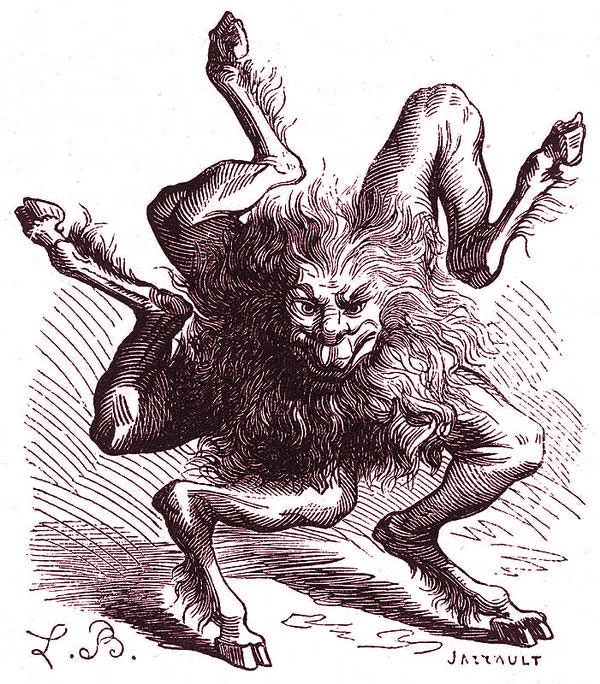
Angelmen are tall, beautiful, and gaunt.  Every single one has alabaster skin, blonde hair, and blue eyes.  They look like angels.  They sometimes drape themselves in loose clothing, but more often they are naked.  You’ll find them in the wastelands, haunting sun bleached ruins.

Lvl Def none Bite 1d6+1

Fly vulture  Int wolf  Dis hunger

Divine Remnant - Angelmen recognize priests and clerics for what they are and will never harm them.  Additionally, angelmen are immune to all spells cast by priests and clerics.

Sacred - Each time you attempt to harm or restrain an angelman, you must succeed on an Easy Cha check.  The DC increases by 2 points each time you succeed in harming an angelman.  Once per day, you can reduce this stacking penalty by 4 points by spending an hour in prayer (asking forgiveness) or in wanton debauchery (hardening your heart).

Healer - Angelmen can cast cure 3/day, healing themselves or a touched creature for 1d6+1 HP.

Lesser Resurrection - An angelman can resurrect a corpse 1/day, restoring their body to life.  However, this is all that it restores.  Mind, memories, and personality are still absent.  


Common Knowledge

Most people believe that there is a race of fallen angels that live on Centerra.  The most common myth casts them as outcasts: not pure enough for Heaven, but still too kind to join with Hell, with their voices stripped from them by the Authority.  Most people pity them, despite how dangerous they are.  It is rumored that they can resurrect the dead, and sometimes people bring their dead loved ones to the angelmen–but they are never seen again.

If you ask a priest, they’ll tell you that the angelmen are abominations.  After a long period of investigation by St. Cascarrion, it was discovered that no fraction of divinity was found anywhere in angelmen.  They were an artificial race, created in mockery of heaven.  The evil wizard Shadoom was a likely culprit.

Experts can explain the individual abilities of angelmen.  They’ll also tell you that you should kill them on sight, before they gather in greater numbers.

Tactics

Angelmen will follow the party around, waiting for them to show weakness.  They typically fight 1-2 rounds of combat, frequently retreating to heal.  If an angelman dies, the others will resurrect it.  (Resurrected angelmen are indistinguishable from the other angelmen–they don’t have much in the way of memories or personality.)

They are bestial in nature, but know how to use their gifts (flight and healing) effectively.  And they are damn patient.  

Encounter Design

Angelmen are designed for a complex outdoor environment, like a ruined city.  Their wings are a lot less useful indoors, and rooftops give them a place to perch while they watch the party.

Here is the archetypical encounter.  (I recommend using it the first or second time your party encounters angelmen.)

1d2 angelmen happen upon the party.  They fly to a safe distance and perch on some rooftops, where they can follow the progression of the party.  While following, additional angelmen will join the first group.  (If using the Underclock, add another angelman whenever a 1 is rolled.)  If the party goes into a building, the angelmen will be waiting when they emerge.  The attack will happen when the party seems weak, or after nightfall.

Their core tactic is “follow you and then attack when you’re weak”, but that doesn’t have to be the case.  However, be aware that they work best when they can retreat and heal.  If they are unable to take those actions, they become much easier to kill.

Your players will eventually get good at preventing angelmen from retreating.  That’s okay.  Remember you embrace your players’ success.

Lairs and Encounters

1. Graveyard

Three angelmen are digging up a grave.  If you allow them to finish, they’ll eventually unearth a coffin, resurrect the person inside, and then begin eating them.  

2. Crossroads

A keening, birdlike call is audible for half a mile.  It is coming from an angelman, with their neck caught in a snare.  30 minutes later, two more angelmen will arrive.  If rescued, the angelman will not be grateful (and in fact, is probably incapable of it).

3. Lair

This is the home of 14 angelmen, although only 1d12 are here at any given time.  They live on the third and fourth stories of a four-story building.  The second story has completely collapsed.  The building is covered with long white streaks of dung and gnawed bones.  It is impossible to approach this building during the day, since there are always 2-3 angelmen watching from the roof.  However, it would be easily entered at night.  Angelmen sleep in groups of 1d4, squatting on their heels with their wings curled around themselves.

4. Desperate

Silas Nybridge is desperate.  He offers you 200s and three years of servitude if you’ll help him bring his wife back to life.  She was so young, and the miscarriage so was horrible.  He has the coffin on the wagon behind him.  Please.  The angelmen are not far from here.  Please.  Please.

Dungeon Design

If you put angelmen in your dungeon, be sure to place them where there are high ceilings, to allow them flight.  Or to phrase it another way: assume that angelmen seek out the places where they can use their wings to the best effect.

Angelmen don’t necessarily need a home.  They can exist strictly as wandering monsters.

Although they look like people, they function more closely to animals, so expect dungeon factions to treat them like animals.

Psychology

It is unclear what the inner life of an angelman is like.

No angelman has ever been observed to speak, laugh, smile, or cry.  They can be roused to anger only with persistence.  They sometimes stare into the sun without blinking for hours.  They seem wary of darkness, and sometimes show signs of fear in dark places.  They rarely show signs of fear while in the sunlight.

They hate demons, though, and always attack them on sight.

Culture

Angelmen have no culture.  They live in squalor, speak no language, and show no curiosity.  When an angleman grows sick, its family usually begins eating it while it is still alive.

This is not to say that they are without altruism.  Parents still protect their young (although they do not seem to mourn them), and companions will heal and assist each other.  

Biology

Angelmen all appear male (hence the name) although some of them are actually female.  Their alabaster skin lacks all hair, and their groin is perfectly smooth, with no external genitals.  Internal gonads have only been discovered after dissection, which appear human-like, albeit smaller.

Reproduction is accomplished through a type of frottage, performed in perfect silence.  The female lays an egg exactly 3 months later, disgorging it through her mouth.  The eggs are soft-skinned and flexile.

Many of them suffer from parasites.  Ticks and tapeworms are both common.  It is unclear how long they live, but the oldest one in captivity is still healthy even 50 years after their capture.  It is theorized that they tend to die from disease.

They build nests from sticks, feathers, and garbage.  Both the male and the female take turns incubating the egg.  The young angelman hatches 6 months after they are laid.

Angelmen spend much of their time searching for carrion.  When they have located a corpse, they’ll resurrect it in order to restore it to freshness, and then kill it, typically by biting the throat.  They prefer to eat organ meat, which they obtain by chewing through the perineum or abdomen.

Ecology

Angelmen are so fucking eerie that you can place them in any creepy place.  They don’t have any specific ties to anything except perhaps divine magic.  (In my setting, they’re believed to be part of the fallout from the War Against Heaven, but that background is hardly needed.  Your angelmen can stem from whatever unsavory slice of history you wish.)

Loot

Petrified Angel Egg - Blackened as smooth as oiled leather.  Hold it tightly to your chest and think bad thoughts about someone within 50’.  It appears in their stomach.  1d6 turns later, they spend a turn painfully regurgitating it.  On the surface of the egg is written a secret of theirs.

Lightning Sword - It's a sword +1. It can be used to shoot a 3d6 lightning bolt, but then it becomes a normal sword until you can get it baptized in a church. Every time it is baptized it must be given a new name; it is the name of the lightning bolt.

Holy Infant - The petrified corpse of a human infant.  If broken, all creatures within 100’ become incapable of violence for 10 minutes.  Anger is banished.  Reset all NPCs dispositions to neutral.  After 10 minutes, the feelings of guilt persist, but gently, and are broken as soon as someone takes a hostile action or says a hostile word.

Scroll of Transfiguration - If read out loud while designating a holy person (priest, cleric, paladin, etc) within 50’, a beam of light shoots and envelopes them.  They are physically pulled up into heaven, with all of their gear.  If that person doesn’t want to go to heaven, they have a chance to protest this, and have a 50% chance to be returned to earth 1d6 minutes later.

Discussion

Angelmen have only a modest attack.  Their real danger is hidden in their Sacred ability.  The penalties from Sacred stack, and they require a solid hour to remove.  This means that repeated encounters with angelmen rapidly erode a party’s ability to deal with them.  The ability to spend an hour praying to negate the stacking penalty is useful, but it can only be done 1/day.

So a single encounter with angelmen is not a big deal, but repeated skirmishes can become challenging.  Of course, if your party is able to find good ways to kill them indirectly, this can be partially negated.  

Angelmen have a low AC, but this is offset by the Sacred ability, which helps protect them against even spellcasters.  They work best in pairs (since they can heal and resurrect each other).  With so many conditions, their strength is very situational.  And of course, they’re only ever interested in food.  (I don’t imagine them being minions of anyone.)


The Monstrome

I'm writing a monster manual.  You can see the work in progress here:

MONSTROME - V2

Newly added in this version:

  • Land Sharks
  • Angelmen
  • Some Fairies

I've left comments on, so bonus points if you want to flag any of my typos.  

And thank you so much to everyone who corrected my typos in the last version!

Thursday, November 21, 2024

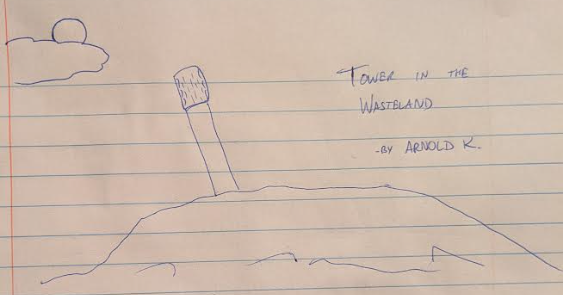
Tower in the Wasteland v2

I recently asked my patrons what posts deserved a sequel and Tower in the Wasteland was one of the first replies.  So here's an updated version of that dungeon.  It's 12 pages now, so roughly twice the size it was before.

Patrons: thanks for all of your support.  I hope to fulfill more of your suggestions in the coming weeks.

--->>>TOWER IN THE WASTELAND V2<<<---

I'm still trying to choose productivity over polish.  (I promise you that these will be the ugliest maps you've ever seen.)

UPDATE: Here's a robo-summary!

This file appears to be a Dungeons and Dragons module titled "Tower in the Wasteland" by Arnold K. The module details a location called the Tower, a seemingly impossible-to-enter metal structure jutting out of an ice field. The module guides the Dungeon Master through the Tower's various levels, encounters, and inhabitants.

  • Levels: The Tower's interior is described as a vertical shaft with a nest, an artillery room, hallways, a bridge, an armory, a mess hall, a kitchen, a cavern, and galleries. Each area has unique challenges and potential treasures.
  • Encounters: The module details encounters with a Peryton (a winged creature with a human shadow), an Abichor Ghoul (a bloated, flying corpse), the daemon Pestilence, a Killing Machine, and a Crippled Angel. Each encounter presents different combat challenges and moral dilemmas.
  • Special Features: The module includes rules for "Dead Soldiers" and their ranks (Captain, Sargent, Lieutenant, General), providing stats and abilities for these undead enemies. It also introduces unique elements like abichor (a spiritual toxin), a Final Weapon, and magical items like metal rings that suppress flight.
  • Themes: The module explores themes of death, war, and the consequences of conflict. The presence of undead soldiers, the daemon Pestilence, and the Killing Machine create a sense of despair and horror.

Overall, "Tower in the Wasteland" offers a challenging and thought-provoking dungeon-crawling experience with a focus on dark fantasy elements and moral choices.

The Monstrome

 So I've been writing like I used to--just sitting down and writing for 5 hours straight.

This shit is exhausting.  I don't know how I used to do this back in 2015.

Anyway, I decided to start putting some of my monsters into a proper bestiary.  It's ~35 pages.

THE MONSTROME (Pageless)

THE MONSTROME (Paged)

UPDATE: MONSTROME v2 (Pageless)

I have a lot of opinions about the best way to write an entry in a monster manual, but I figured I would try to lead by example instead of writing a silly proscriptive post.  It's unformatted, so it looks like shit, but I like the content and don't hate the structure.

There's currently only a few monsters in there.  Crazy how long it takes to write up a good monster entry.

  • Ankheg
  • Giant Worm
  • Bone Needle Man
  • Corpse Balloon
  • Ghouls, Geists, Ghasts, and Drowners
  • Terophidians
Corpse Balloons are the only entry that are 100% new.  (Although, I'm not sure I've posted my take on Giant Worms, before.)

Bone Needle Man and Terophidian are what I would consider core IP of my blog (along with maybe gretchlings, popkins, and the false hydra).

I left comments unlocked.  Feel free to tag any typo that annoys you.  

UPDATE: thank you everyone who corrected my typos!  (Sinusoidal, Devin, Alex, Borja, Grant, Anti Time, L M, Doug, Chris, Dave, Louis, Iain, Isaac, and Anon)  I'm closing comments so that I can make a v2 with more monsters.

It's kind of a mess, but I wanted to publish something tonight.  (If I don't keep momentum, I never finish anything.)

Tuesday, November 19, 2024

Pennetra (New Combat System)

 "Pennetra" logo

Okay, here’s a new combat system.  I’m calling it Pennetra because I had to write the word ‘Penetrating’ like 10 times in this post and other potential names like Penetrox are already taken by industrial aluminum joint compounds.

I’m trying to do (1) something new, and (2) something where a smaller % of attacks are misses.

Simple Version

This is the one-roll version.


Next to each weapon in your inventory, you have two numbers: Penetration and Damage.  Penetration helps you hit, and Damage is how much you hurt the other guy.  


Penetration

Damage

Dagger

d4

4

Sword

d6

4

Greataxe

d6

5


Making an Attack


When you make an attack, you roll Penetration to see if you hit.

  • If the result equals the target’s Defense, you hit.

  • If the result is 2x the target’s Defense, you hit 2x and deal +2 damage.

  • If the result is 3x the target’s Defense, you hit 3x and deal +4 damage.


That’s it.  That’s the whole mechanic.


Modifiers


  • Increase your Penetration die by 1 size if you are a Fighter.

  • Increase your Penetration die by 1 size if you have a magic weapon.

  • Increase damage by 1 point if you are strong.

  • If you have a situational bonus to hit, decrease their Defense by 1 point.


Defense


Unarmored = 1 (everything hits)

Leather = 2

Chain = 3

Plate = 4

Dragon = 5


There’s a satisfying effect here: against unarmored enemies, all weapons are equally likely to hit.  However, against heavily armored enemies, daggers (and other small weapons) become almost useless.  (The big advantage of daggers is that they can be concealed, thrown, and used in a grapple.)


When you get a situational bonus, you decrease their Defense instead of upgrading your Penetration die.  This is to benefit small weapons (like daggers) and non-fighters.  If you have a situational advantage against a person in leather armor, a dagger is as good as a sword–which kinda makes sense.


Some side effects of this system:

  • Attacks hit more often, so you’ll need to increase HP if you want combat to take a similar number of rounds.  Alternatively, keep HP the same if you want combat to be shorter than what you’re used to.  (For monsters, I’m going to try 5 HP per level and see how that feels.)

  • Physical weapons got a buff, but magic didn’t.  As a result, magic damage will feel weaker than what you might be used to.  This might actually be a feature if you want to push your wizard players towards using non-damaging spells.  It might be a bug if you want your wizard to be the nuke.

  • The scaling between armor types is sharper here.  Plate is stronger than what you are used to, and leather is much weaker.  Chain is about the same.

Adding Complexity: Double Dice

Okay, maybe you want something a little more interesting?  Let’s change it to a pair of dice rolls.


Penetration

Damage Die

Dagger

d4

d6

Sword

d6

d6

Greataxe

d6

d8


Once rolled, these dice are not fixed.  You can switch them freely.


This makes it even easier to hit your targets now.  It might look like you’ll be doing a little less damage, but since you can arrange your dice so that (if both dice are equal-or-higher-than the target’s Defense) the bigger die is the damage die, that doesn’t end up being the case.


The modifiers are the same as above.  2x and 3x hits each add another d4 of damage.


Monster Attacks


Some speculative conversions.


Penetration

Damage Die

Flat Damage

Goblin

d6

d4

3

Bandit

d6

d6

4

Bear

2 x d6

d8

4

Orc

d8

d8

5

Ogre

d10

d10

6

Owlbear

3 x d6

d8

5

Giant

d12

d12

7

Dragon

3 x d10

d8

5

Adding Complexity: Mighty Maneuvers

Fighters have a chance to do cool things with their attacks, for free.


Beginning at level 2, Fighters get a third die to roll, called the Mighty Maneuver die.  This is a d4 at level 2, but it becomes a d6 at level 4.  (If you have a d5, you can use that for level 3.)


The fighter will roll all 3 dice, and assign each one to a task: Penetration, Damage, and the Mighty Maneuver.  After damage is dealt, the value showing on the Mighty Maneuver die becomes the DC for the enemy’s save to avoid the Fighter’s combat maneuver.  You still need to hit your target in order to attempt a Mighty Maneuver.


Enemies usually use a d6 to resist, or a d8 if they’re good at it.  And a lot of actions are impossible.  (You’ll never shove a dragon, for example.)


Example:


Frollo the Fighter attacks, and therefore rolls all three dice: 4, 5, 6.  The target has a defense of 3 (chain).  He decides to use the 4 for Penetration (a hit!) and the 5 for damage.  The 6 becomes Frollo’s trip attempt.


His enemy, the evil unicorn Hexodia, is not easily tripped with four legs.  The unicorn rolls a d8 to avoid being tripped, but gets a 5.  This is less than Frollo’s 6, and so the unicorn topples with a surprised neigh.


Alternatively, Frollo could have used 6 for Penetration (a double hit!) and 1d4+4 for damage.  (The extra 1d4 comes from the second hit).  This would have left the 5 for the Maneuver.  Since the unicorn also rolled a 5, it would not have been tripped.

Why Would Anyone Use This System?

Compared to regular D&D, there's less math and smaller numbers, so attacking is a little simpler. Attack rolls are probably faster for everyone except the fighter. And attacks miss less often, so combat feels faster.


Compared to Into the Odd, it allows for smoother scaling of enemy difficulty. In ItO, enemy Armor affects your hit chance and reduces your damage (effectively double-dipping). In Pennetra, enemy Defense mostly reduces your chance to hit, but because you often switch dice to land the hit, the hits tend to be smaller as well, so Defense functions as a subtle (and milder) form of damage reduction.


It has diminishing returns on strong attackers, which is nice. Even if you get your Penetration die up to d12 (or d20), you'll still miss occasionally against an armored foe.


I think it preserves the intended differences between the different weapon types, while still giving people a reason to carry a dagger.


And it makes Fighters feel cool. They get something that no one else does.

Discussion

You could take this a step further, and add a fourth die that improves your Defense for the next round.  There’s a couple of ways to do this, but I don’t like any of them very much.  


I probably would let a player take a total defense action, though, and gain +1 Defense at the cost of forfeiting all other actions.


Expect some hesitation as players try to figure out which configuration does the most damage.  (It’s not too hard.  An extra hit is worth 2.5 points of damage.)  Is this decision interesting and meaningful?  Maybe.


It’s more interesting for fighters, since they have to choose between dealing more damage and doing something cool.  It could potentially lead to some situations where a fighter focuses more on the maneuver and less on the damage, which is cool.  


I like fighters to be: 

  • Simpler than other classes.

  • More spontaneous.  Instead of declaring what spell you are casting, a fighter is largely reacting to openings that the enemies give.

  • Good at doing several things in combat, not just damage.

Domain Expansion

Actually, you could rip out the engine from Pennetra and apply it to other types of resolution mechanics. Example: crafting.


When you craft something, roll a Materials die, Tools die, and a Skill die. The results are assigned to your three goals of Quality, Efficiency, and Time. (Low Efficiency means that you end up using more raw materials than you thought you would. High efficiency means that you have some left over.)


If you think of any other fun applications, post it in the comments.

Some Classes

GLOG-adjacent.  Fighters and barbarians are both durable, but they’re different kinds of durable.

Fighters 

Fighters upgrade their Penetration die by 1 step.


Level 1 - Defend

Level 2 - Mighty Maneuvers 1d4

Level 3 - Extra Attacks

Level 4 - Mighty Maneuvers 1d6


Defend


Once per round, you can intercept a physical attack that was meant for an adjacent ally.  You take all of the damage that they would have taken.  You can declare this after damage is rolled.


Mighty Maneuvers


See above.


Extra Attacks


When fighting multiple enemies, a Fighter can attack two enemies at once.  They will roll all three dice at the same time.  A Penetration die is assigned separately to each enemy, and the third die is used for Damage.


Alternatively, the third die can be used for a Mighty Maneuver, performed against both enemies simultaneously.


Barbarians

Barbarians get more HP than fighters, but they can’t wear armor.  Like Fighters, they also upgrade their Penetration die by 1 step.


Level 1 - Rage

Level 2 - Quaff

Level 3 - Mighty Strength

Level 4 - Mighty Rage


Rage


Increase your damage die by 1 step, but you cannot take any actions that aren’t part of an action to directly murder your enemies.  Rage ends when all enemies are subdued or driven off.  Once per round, you can attempt to end it early with a 2-in-6 chance of success.


Quaff


You drink down some booze.  It heals for you for 1d6+[Level] HP, but you get drunk.  For the next hour, if you ever (1) make an attack roll (2) and miss (3) and get doubles, you suffer a fumble.  Your weapon breaks, an enemy gets a free attack against you, etc.


Mighty Strength


You can do some magnificent feat of strength 1/day, like rip a door off its hinges.  If used to intimidate, you get a large bonus.  This ability isn’t useable in combat.


Mighty Rage


Your rage improves, increasing your damage die by another step when raging.